
Make Your Workouts Feel Better Before They Even Start
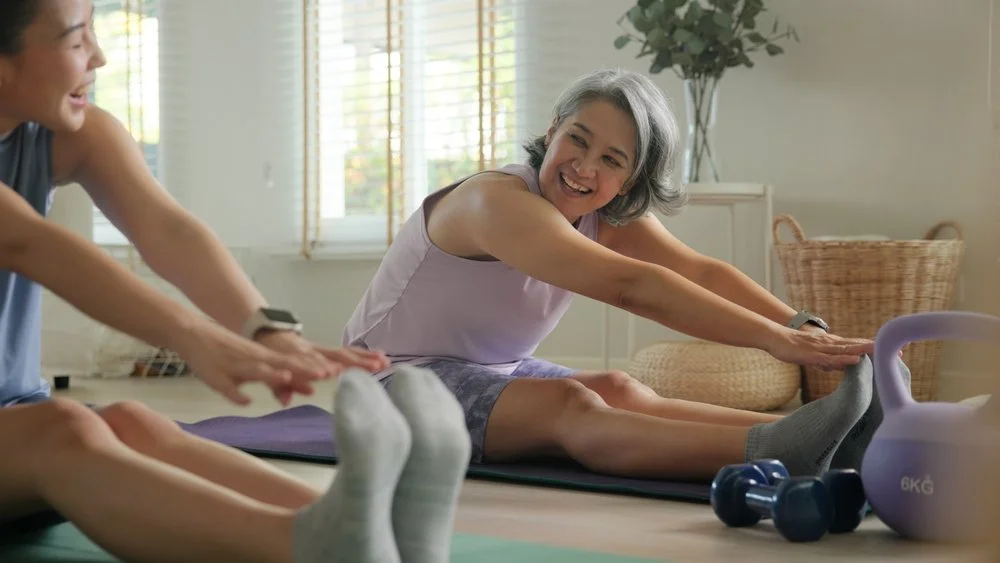
Staying active means something a little different to everyone, and it usually changes over time. For some people, it’s part of a long-standing routine they’ve built over the years. For others, it’s something they’re trying to come back to, or something they’re just beginning to explore because they know it matters. It might look like strength training, a Pilates class, or going on a bike ride a few times a week, but also, it can just as easily be walking more, getting outside, or finding small ways to move throughout the day that feel manageable and realistic.
What most people don’t expect is that the decision to be active is often the easy part. What feels different, especially as life gets fuller, is how the body responds once you start. You can still show up with the same intention, but the experience itself can feel less predictable. Some days feel smooth and natural, while others take more effort to settle into, and that difference is usually what leads people to start thinking about how they prepare for movement rather than just the movement itself.
What Your Body Relies on When You Move

Every form of movement, regardless of intensity, depends on how efficiently the body can deliver oxygen and nutrients to working muscles. That process is managed by the cardiovascular system, which is constantly adjusting to meet the demands you place on it. When you begin moving, your muscles require more oxygen to produce energy, and your blood vessels need to respond quickly by widening and allowing more blood to flow through.
If that response happens smoothly, movement tends to feel more controlled and sustainable. If it is slower or less efficient, the body has to work harder to produce the same level of output, which can change how quickly fatigue builds and how comfortable, or uncomfortable, it feels to stay active. This is why two people can do the same activity and have very different experiences, and why the same person can feel completely different from one day to the next.
Understanding that relationship is what shifts the focus from simply “having energy” to supporting the systems that allow the body to use that energy effectively.
How Your Body Keeps Blood Flow Moving During Activity

Nitric oxide is a molecule the body produces as part of this process, and it plays a key role in how blood vessels respond during movement. It signals the smooth muscle in blood vessels to relax, which allows them to widen and increase blood flow. This process, known as vasodilation, directly affects how efficiently oxygen and nutrients can be delivered to muscles while you are active.
There are two primary ways the body supports nitric oxide production. One involves amino acids, specifically L-citrulline and L-arginine. L-citrulline is converted into L-arginine in the body, which is then used to produce nitric oxide. This pathway has been studied for its role in supporting circulation, endurance, and the ability to sustain effort during more demanding activity.
The second pathway involves dietary nitrates, which are found in ingredients like beet root and spinach. These nitrates are converted into nitric oxide through a separate mechanism, providing an additional way for the body to support circulation. When both pathways are supported, the body has more flexibility in how it maintains blood flow during activity, which can contribute to a more stable and sustained response.
Where Pulse Fits into the Way Your Body Works
Pulse brings these two pathways together in a way that reflects how the body actually functions during movement. By including L-citrulline and L-arginine alongside beet root and spinach extract, it supports nitric oxide production from multiple directions rather than relying on a single mechanism to carry the effect.
That matters because circulation is not controlled by one process alone. Supporting it from multiple angles allows the body to respond more consistently, especially when activity levels vary from day to day. This approach also aligns with how people actually move, which is rarely the same from one day to the next.
The nano-sized delivery used in Pulse adds another layer to this. By reducing particle size, the formula is designed to be absorbed more efficiently, which helps the body use more of what is taken in rather than losing a portion of it through digestion. With ingredients like these, where bioavailability influences effectiveness, that difference becomes meaningful.
What That Looks Like When You’re Active

When the cardiovascular system is supported in this way, the effect tends to show up across the entire experience of movement rather than in a single moment. The beginning of activity can feel more approachable, as the body transitions into movement more easily. As effort continues, the ability to maintain output can feel more stable, which can influence how long you’re comfortable staying active. Afterward, recovery often feels more aligned with the effort that was put in, rather than lingering longer than expected.
Over time, you start to notice it in the way movement unfolds more smoothly from beginning to end, and how your body stays with you instead of falling behind. That sense of consistency and achievement is often what makes it easier to keep moving and challenging your body.
Why This Feels Different from Most Pre-Workouts

Many pre-workout products are designed to create a strong, immediate sensation, often through stimulants that increase perceived energy. While that can be useful in certain settings, it does not always address the underlying systems that determine how the body performs during activity.
Pulse approaches pre-workout from a different angle by focusing on circulation and oxygen delivery. Instead of creating a surge, it supports how the body responds to movement at a physiological level, which makes it easier to use consistently across different types of activity. Whether someone is engaging in structured exercise or simply trying to stay active throughout the day, the same foundational systems are involved.
This makes the product more adaptable to real life, where routines are not always fixed and activity can look different from one day to the next.
Supporting Movement in a Way That Lasts

The value of staying active does not change with age or experience, but the way it fits into life often does. What remains consistent is the body’s need to deliver oxygen, nutrients, and energy efficiently during movement, regardless of how that movement looks.
Supporting the cardiovascular system helps meet that need in a way that feels practical and relevant. Instead of trying to recreate how things used to feel, it allows the body to perform well in the present, which is what makes it easier to stay consistent over time.
Pulse fits into that idea by supporting the systems that movement depends on, making it easier to keep showing up in a way that feels manageable, effective, and aligned with how your life actually looks day to day.
Important Information:
Consult a healthcare professional before using if you are pregnant, nursing, taking medication, or have a medical condition. Discontinue use if adverse reactions occur. Keep out of reach of children.
These statements have not been evaluated by the Food and Drug Administration. This product is not intended to diagnose, treat, cure, or prevent any disease.