
Your eyes are working from the moment you open them in the morning to the moment you close them at night. They're continuously adjusting to light and contrast, converting millions of photons into electrical signals every second, a process that draws on more cellular energy than almost any other tissue in the body.

That energy demand is also at the center of something most people never connect to their vision: how the eye ages. A significant part of what we accept as ordinary, age-related vision change comes down to cellular energy metabolism in the retina.
The mitochondria inside your retinal cells, particularly in the photoreceptors and the retinal pigment epithelium, are among the most metabolically active in the human body. Research suggests that mitochondrial efficiency in these cells declines with age, and as that happens, those cells have less of the energy they need to do their demanding work. Understanding that changes how you think about supporting your eyes. Instead of simply waiting and reacting, you can actively support them every day, the same way you already support your skin, your sleep, and your overall health.
That's where the Illuminator, Blue, and AO Vision come in. Each one supports a different piece of the picture. Red light supports the mitochondria; methylene blue helps keep the cellular energy process moving, and targeted nutrition through AO Vision supports the retinal structures that make clear vision possible. Together, they cover three distinct biological pathways, giving your eyes daily, cellular-level support that works right alongside the care you already give them.
What Your Eyes Have in Common with a Thriving Plant

More than you'd expect. A plant needs three things working together to thrive: light to power its energy, water to carry that energy and nourishment through every cell, and rich soil to feed and protect it over the long term. Take away any one and the whole plant suffers for it.
Your eyes rely on the same three things. Your retinal cells need their mitochondria firing, that energy moving through tissue that never rests, and a steady supply of protective nutrients the body can't make on its own. The Illuminator, Blue, and AO Vision each meet one of those needs, giving your eyes the complete support they deserve.
The Illuminator
A plant turns light into energy. Did you know your retinal cells respond to light, too? Red light from the Illuminator gives the mitochondria in those cells a cue that supports their energy production, much like morning sun signaling a plant to get to work. It's the spark that helps set the day in motion.
Blue
In a plant, water is the carrier. It moves dissolved minerals up from the roots and into every cell, keeping the whole system supplied. Blue plays a similar role inside your cells. Methylene blue supports the flow of oxygen and energy through the mitochondria, helping the energy your retinal cells produce keep moving to where it's needed.
AO Vision
Even with steady light and water, a plant in poor soil never reaches its potential. AO Vision is the rich soil. It supplies the specific nutrients your retina and macula are built to use, the ones that help protect their structure and support how they hold up over time.
The Illuminator: Light for Your Mitochondria
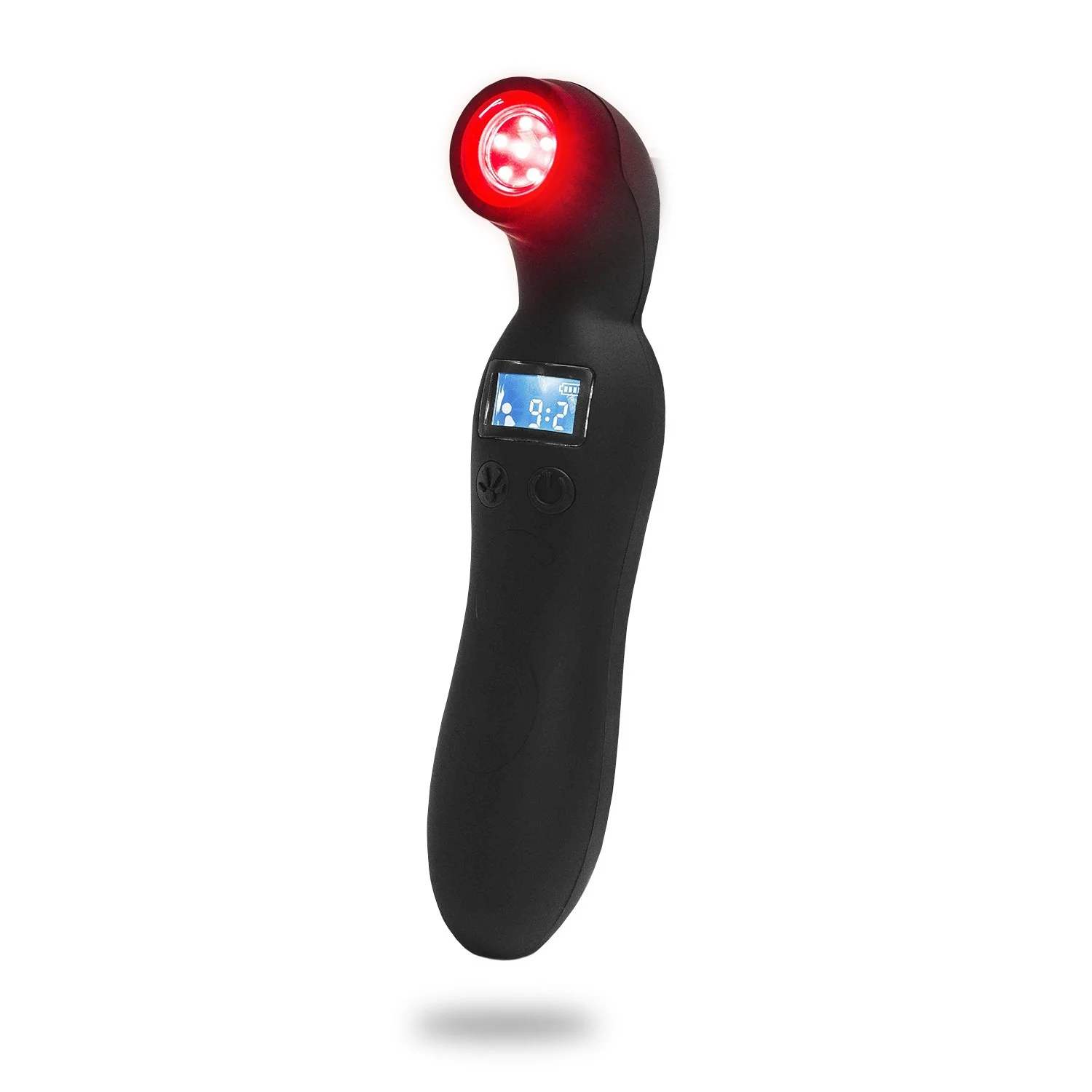
The mitochondria inside your cells respond to light. They're especially responsive to wavelengths in the deep-red range, which they absorb through an enzyme called cytochrome c oxidase. This enzyme sits in the mitochondrial membrane and helps drive the production of cellular energy. Research on photobiomodulation points to cytochrome c oxidase as a primary photo-acceptor in cells, with deep red wavelengths around the 620 to 680 nanometer range aligning with the enzyme's absorption peaks.[1] Photobiomodulation has been studied across many tissue types for decades.
For your eyes, this matters more than anywhere else in the body. The retina is one of the most metabolically active tissues you have, and its rod and cone photoreceptors carry a very high density of mitochondria to keep up with their constant energy demands.[2, 4] Those photoreceptors convert incoming light into electrical signals every waking moment, and they lean on mitochondrial energy to do it. As energy production becomes less efficient with age, visual performance can follow.
The Illuminator delivers deep red light at 660nm, within that documented absorption range. To direct it toward the eye, the cardboard tube from a roll of paper towels works well: place one end over your eye and hold the Illuminator at the other end, about twelve inches away. The tube keeps the distance steady and channels the light toward the eye instead of letting it scatter. Research on deep red light for vision has used brief daily sessions of around three minutes,[3, 4] so there's no need to overdo it. Use the Illuminator only as directed, keep your sessions short, and if you have an eye condition or any concerns, check with your eye doctor before you begin.
That simple setup, the tube and the close, focused distance, is also where the Illuminator's design earns its place. Most red-light devices, like the broad panels you may already own, are built to cover wide areas of skin or body, and they do that well. This is a different job: getting a focused beam to a small target at a close range. The Illuminator's narrow, cylindrical shape is made for exactly that, fitting neatly at the end of a paper towel tube and concentrating the light right where you want it. When it comes to delivering light to the eye, the tool format matters as much as the wavelength.
Why It All Comes Back to Mitochondria

By now the through line is clear. Your retinal cells are unusually hungry for energy, that energy comes from mitochondria, and mitochondria grow less efficient as we age, a process that oxidative stress and environmental exposure can speed up. What's worth understanding next is where this leaves the Illuminator and Blue, because the two turn out to meet at the same place.
Both red light and methylene blue have been studied as ways to support mitochondria, mostly in the context of protecting the brain and nervous system. A 2015 perspective in Frontiers in Cellular Neuroscience by Gonzalez-Lima and Auchter laid out the case that the two work toward the same cellular outcome by different routes. Red light acts on cytochrome c oxidase through photon absorption. Methylene blue acts as an electron carrier, helping the electron transport chain keep running when it would otherwise slow down. Different mechanisms, one shared goal: keeping mitochondrial energy production moving.[5]
That work was done in neural tissue, which is part of what makes it relevant here. The retina is an extension of the central nervous system, built from the same energy-demanding neurons, so the kind of mitochondrial support researchers find promising for the brain applies to your eyes too.
Blue: Keeping Energy in Motion
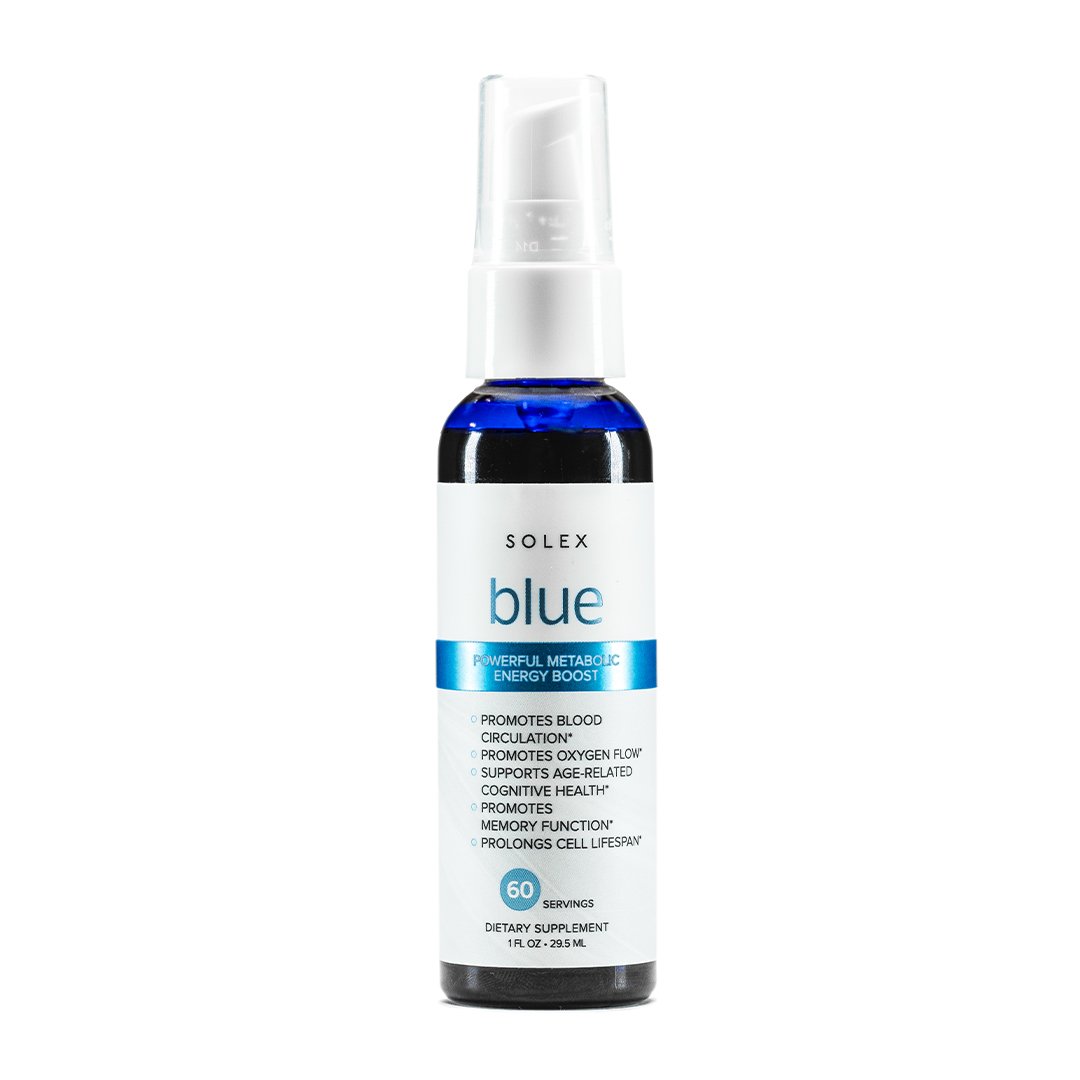
Methylene blue plays the carrier's role inside your retinal cells: it helps keep the energy-making process moving when it would otherwise stall.
Methylene blue has been studied in medicine for well over a century, and in recent decades researchers have looked closely at what it does inside the mitochondria at low doses. It acts as an alternative electron carrier in the electron transport chain, picking up electrons and shuttling them along to keep ATP production going even when earlier steps in the chain are impaired. In plain terms, it gives struggling mitochondria a second route to keep making energy.[6]
What makes this worth a closer look for the eyes is that the research has gone there directly. The retina is part of the central nervous system, and its cells carry some of the highest energy demands in the body. In laboratory studies on retinal cells, low-dose methylene blue raised cytochrome c oxidase activity and helped protect those cells when their mitochondria were placed under stress.[7] In animal models of mitochondrial dysfunction, it helped preserve the structure and function of the retina.[8] This is early research, but it points in a consistent direction: support the mitochondria, and you support the tissue that leans on them most.
What sets Blue apart from other methylene blue products is how it's delivered. Blue is built using nanotechnology. The name comes from the nanometer, a billionth of a meter, a scale so small that a single marble compares to a nanometer roughly the way the whole Earth compares to that marble. Formulating at this scale is how Blue is designed to deliver its ingredients in a form the body can take up and use efficiently, with less lost along the way.
AO Vision: The Nutrition Your Retina Is Built to Use
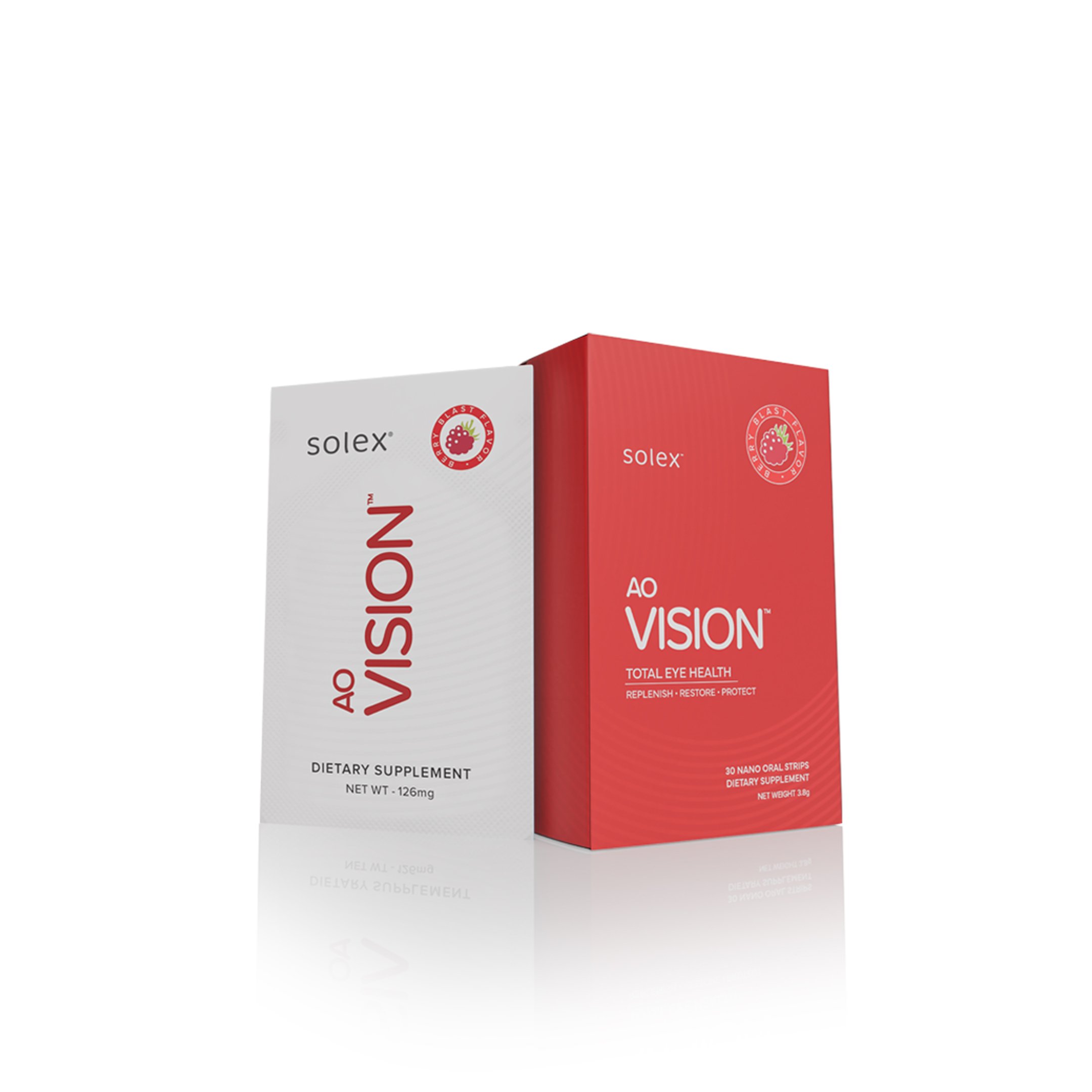
Red light and methylene blue take care of the energy side of the equation. What the retina also needs, and what no amount of light or cellular energy can replace, is specific nutrition that helps protect its structure and support its function over time.
Three carotenoids stand out here: lutein and zeaxanthin, the most clinically studied for macular health, and astaxanthin, a powerful antioxidant with a growing body of research behind it. Lutein and zeaxanthin concentrate naturally in the macula, the central part of the retina responsible for your sharpest, straight-ahead vision. Together, they form the macular pigment, a layer that filters high-energy blue light before it reaches the photoreceptors underneath and serves as the retina's front line of antioxidant defense. That pigment's density matters: in a controlled trial, daily lutein and zeaxanthin raised macular pigment levels and improved chromatic contrast and recovery from bright-light glare, consistent with earlier work linking higher macular pigment to better visual performance.[9]
Astaxanthin comes at it from a different angle. Produced by certain microalgae, it's one of the most potent antioxidants in nature, and because it's lipid-soluble it can reach the retina and provide oxidative protection directly to the photoreceptors and the tissue around them.[10]
One key point about lutein and zeaxanthin: your body can't make them. They must come from your diet, mostly from dark leafy greens like kale and spinach, and most people don't eat enough to keep their macular pigment well stocked. This is where the strongest evidence comes in. In AREDS2, a large clinical trial run by the National Eye Institute, a formula with 10 mg lutein and 2 mg zeaxanthin reduced the risk of AMD progression by about 26% over the five-year study. A 10-year follow-up found that the lutein and zeaxanthin group had a further 20% lower risk of progressing to late AMD than the group given beta-carotene, which is why it replaced beta-carotene in the formula.[11]
AO Vision brings all three carotenoids together with vitamin C, vitamin E, blueberry, maqui berry, and bilberry in a dissolvable strip. Like Blue, it's made using nanotechnology, working on a very small scale to help these nutrients absorb well, which matters more here than it does for most ingredients, since carotenoids are fat-soluble and not always easy for the body to take up.
Three extraordinary products. One complete system.

Each of these products holds its own. Red light therapy has a documented body of research behind it that spans decades and multiple research institutions. Methylene blue has been studied across hundreds of papers and continues to gain attention in neuroprotection and longevity research. The AREDS2 findings on lutein and zeaxanthin are among the most clinically robust in all of nutritional eye science. You don't need all three to benefit. What changes when you use them together is that you stop addressing one piece of your eye health and start covering all of it.
Each one also does something the others can't do. No supplement reproduces what photobiomodulation does for retinal mitochondria. No light device can lay down zeaxanthin in the macular pigment layer. And neither light nor nutrition steps into the electron transport chain the way methylene blue does. Three distinct mechanisms, working in three directions, all supporting the same goal.
Illuminator: Red light, 660nm. Supports mitochondrial energy production in retinal cells through photobiomodulation each morning.
Blue: Methylene blue. Supports the electron transport chain, helping cellular energy keep flowing through the day.
AO Vision: Lutein, Zeaxanthin, Astaxanthin. Delivers the nutrients that help build the macula's protective pigment and support the retina's structure over time.
Most things that support your health don't work overnight, and that's not a flaw in the formula. Research on a high-dose lutein and zeaxanthin supplement found that macular pigment rose significantly by about eight weeks and kept climbing through sixteen.[12] Photobiomodulation's effects build with consistent use, a little more with each morning. Give these products the time they need, and they'll give your eyes the support they were built to provide.
Your Vision is Worth More than a Reaction
The people we love, the details we remember, the moments we don't want to miss. Vision makes all of it possible. Give it the daily, cellular-level support it deserves.
-
Karu TI, Pyatibrat LV, Kalendo GS. "Photobiological modulation of cell attachment via cytochrome c oxidase." Photochem Photobiol Sci. 2004;3(2):211–216. doi:10.1039/b306126d
Jiang K, Nellissery J, Swaroop A. "Determination of Mitochondrial Respiration and Glycolysis in Ex Vivo Retinal Tissue Samples." JoVE. 2021;(174):e62914. doi:10.3791/62914
Shinhmar H, Hogg C, Neveu M, Jeffery G. "Weeklong improved colour contrast sensitivity after single 670nm exposures associated with enhanced mitochondrial function." Scientific Reports. DOI: 10.1038/s41598-021-02311-1.
Shinhmar H, et al. "Optically Improved Mitochondrial Function Redeems Aged Human Visual Decline." J Gerontol A Biol Sci Med Sci. 2020;75:e49–e52. doi:10.1093/gerona/glaa155
Gonzalez-Lima F, Auchter A. "Protection against neurodegeneration with low-dose methylene blue and near-infrared light." Frontiers in Cellular Neuroscience, 9:179, 2015. doi:10.3389/fncel.2015.00179
Yang SH, Li W, Sumien N, Forster M, Simpkins JW, Liu R. "Alternative mitochondrial electron transfer for the treatment of neurodegenerative diseases and cancers: methylene blue connects the dots." Progress in Neurobiology, 2015. doi:10.1016/j.pneurobio.2015.10.005
Daudt DR, et al. "Methylene Blue Protects Primary Rat Retinal Ganglion Cells from Cellular Senescence." Investigative Ophthalmology & Visual Science (IOVS), 2012. PMID 22661471; DOI: 10.1167/iovs.12-9734
Zhang X, Rojas JC, Gonzalez-Lima F. "Methylene blue prevents neurodegeneration caused by rotenone in the retina." Neurotoxicity Research, 2006. PMID 16464752; DOI: 10.1007/BF03033307
Hammond BR, et al. "A Double-Blind, Placebo-Controlled Study on the Effects of Lutein and Zeaxanthin on Photostress Recovery, Glare Disability, and Chromatic Contrast." Investigative Ophthalmology & Visual Science, 2014. DOI: 10.1167/iovs.14-15573
Lai TT, Yang CM, Yang CH. "Astaxanthin Protects Retinal Photoreceptor Cells against High Glucose-Induced Oxidative Stress by Induction of Antioxidant Enzymes via the PI3K/Akt/Nrf2 Pathway." Antioxidants, 9(8):729, 2020; doi:10.3390/antiox9080729
Chew EY, Clemons TE, Agron E, et al. "Long-term outcomes of adding Lutein/Zeaxanthin and Omega-3 Fatty Acids to the AREDS Supplements on Age-Related Macular Degeneration Progression: AREDS2 Report #28." JAMA Ophthalmology, 2022. PMID 35653117; DOI: 10.1001/jamaophthalmol.2022.1640
Obana A, Gohto Y, Nakazawa R, Moriyama T, Gellermann W, Bernstein PS. "Effect of an antioxidant supplement containing high dose lutein and zeaxanthin on macular pigment and skin carotenoid levels." Scientific Reports, 10:10262, 2020. doi:10.1038/s41598-020-66962-2. PMC7314813
DISCLAIMER
Who should avoid methylene blue: anyone taking antidepressants such as SSRIs, SNRIs, or MAO inhibitors, or other serotonergic medications; anyone with G6PD deficiency; and anyone who is pregnant or breastfeeding. If you take any medication or have a health condition, talk with your doctor before starting.
These products are designed to work alongside regular eye care, not to replace it. If you have an eye condition or take any medication, talk with your doctor before starting.