
How Information Is Delivered (Part 2)
Why Some Signals Feel Clearer Than Others

In Part 1 of this series, we explored how living systems respond to patterned waves. Sound, vibration, and subtle physical signals are part of the environment we move through every day.
But responsiveness is only part of the picture.
If a system can detect patterned input, another question naturally follows.
Why do some signals feel clearer or more noticeable than others?
To answer that, we need to look at the delivery.

When a Signal Competes with Its Environment
In engineering, clarity depends on what is called signal-to-noise ratio.
A signal is the intended pattern. Noise is everything else happening at the same time.
Imagine trying to have a conversation in a quiet room versus in a crowded restaurant. The words are identical. Your hearing is unchanged. What differs is the surrounding interference.
In the restaurant, the background sound competes with the signal. The message becomes harder to distinguish.
The signal itself has not changed. What has changed is how clearly it can be perceived.
Wave-based systems operate under the same principle. The presence of competing input can influence how structured patterns are experienced.
Stability and Coherence

Another important concept is coherence.
In physics, coherence refers to how stable and aligned a wave pattern remains over time. A coherent pattern maintains its structure, while an incoherent pattern disperses.
When patterns are introduced in a steady and consistent way, they are easier to distinguish from surrounding interference. When they fluctuate unpredictably, they may feel less defined. These ideas describe how patterns are presented and perceived, not how they function medically. They simply reflect how structured information behaves within complex environments, where stability and structure influence perception.
Why Delivery Becomes Relevant

Most audio-based tools rely on standard digital playback. A sound pattern defined by its frequencies and timing is sent through a phone, speaker, or headphones.
For listening purposes, that works effectively. However, when audio is used as part of imprinting or ambient broadcasting practices, the delivery system becomes more relevant.
A device designed primarily for communication or convenience may handle signal strength and structure differently. That does not make it better or worse. It simply reflects its intended design.
When structure is maintained, signals tend to feel more defined. When structure competes with interference, clarity can diminish.
Understanding this creates a more complete picture. It also raises an important practical question. How do these principles show up in tools designed to deliver structured sound patterns intentionally?
From Principle to Practice
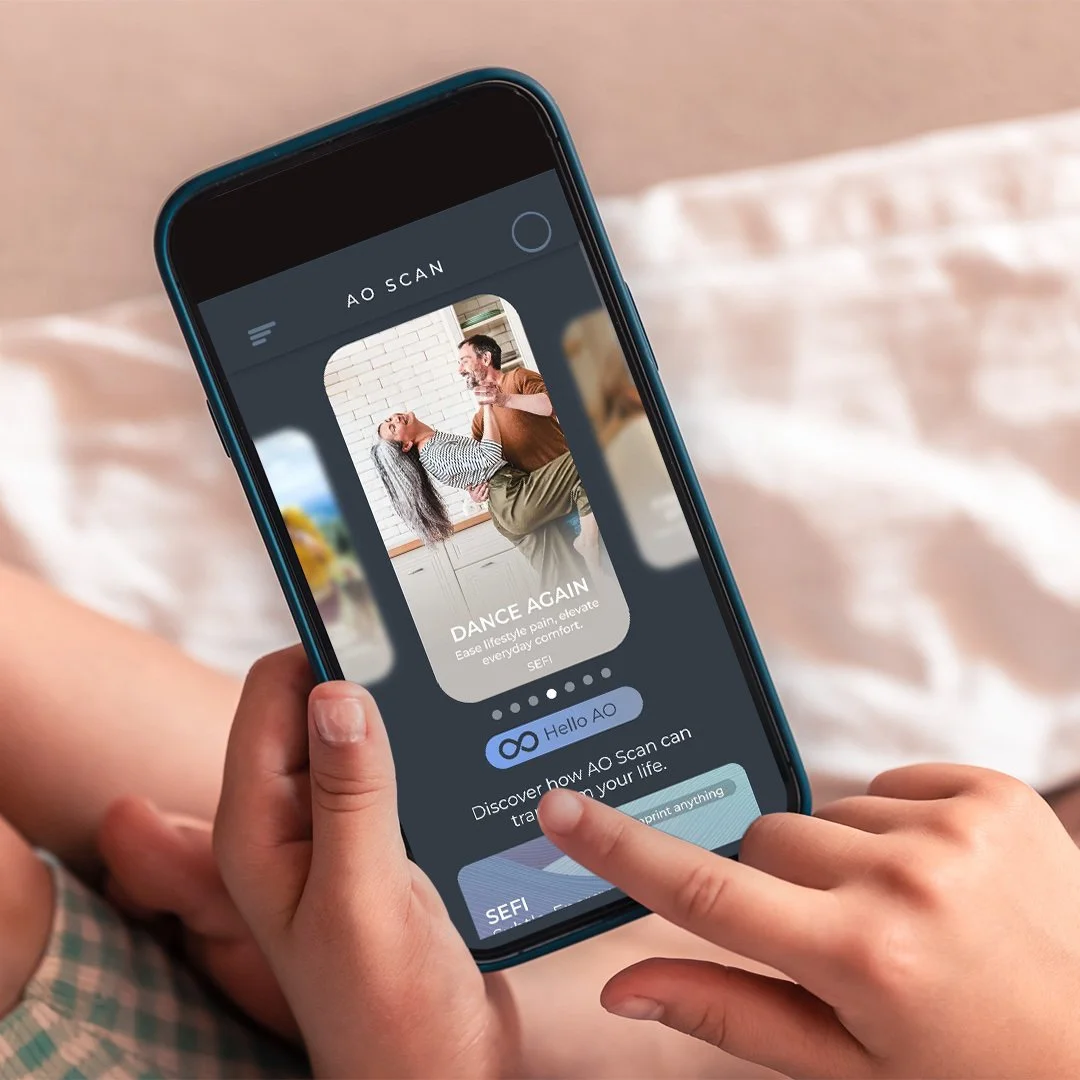
Inside AO Scan, audio-enabled programs allow users to explore selected sound patterns through the SEFI module and other features that use structured audio delivery.
When a user selects a pattern within SEFI, that pattern is played through audio output. In AO Scan, “imprinting” refers to saving selected sound patterns into a medium, such as water, a card, or digital storage, so the user can replay or interact with those patterns later as part of a personal wellness routine. “Broadcasting” refers to playing the selected pattern into the surrounding space for ambient listening or experiential purposes. These are personal exploration tools and are not medical or therapeutic processes.
In both cases, the experience depends on how clearly the selected pattern is delivered. The audio pattern itself is defined by its timing and structure. However, as we discussed earlier, signal clarity can be influenced by interference, competing input, and stability of delivery.
This is where the earlier principles become relevant. Signal-to-noise ratio, coherence, and stability do not change what a pattern is, but they can influence how distinctly it is perceived within a given environment.
The pattern matters, but the delivery matters as well. Understanding that connection creates a stronger foundation for exploring how AO Scan can be used to support daily wellness routines.
Putting the Pieces Together

Within AO Scan, the Subtle Energy Frequency Imprinter (SEFI) allows energetic patterns to be played or broadcast as part of personal mindfulness and wellness routines. These patterns are delivered as wave-based information, which individuals may choose to explore in ways that align with their own wellness practices.
Understanding how wave-based information interacts with living systems helps explain why tools like AO Scan and SEFI are designed with intention around structure, consistency, and delivery. It provides helpful context for why certain experiences feel clearer or more engaging than others.
*AO Scan Technology is intended for personal insight and wellness support only. It is not a medical device and does not diagnose, treat, cure, or prevent any disease or condition. It is designed to promote self-awareness through the exploration of frequency-based data and sound tools.